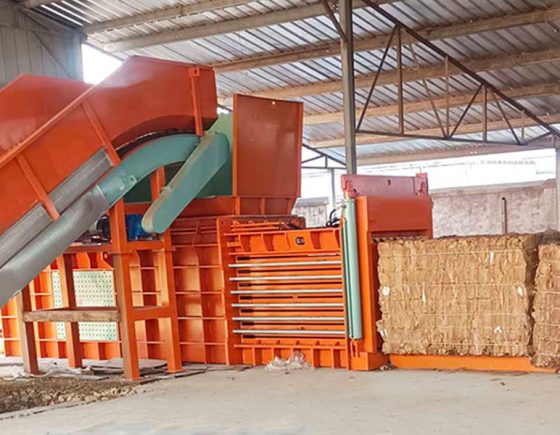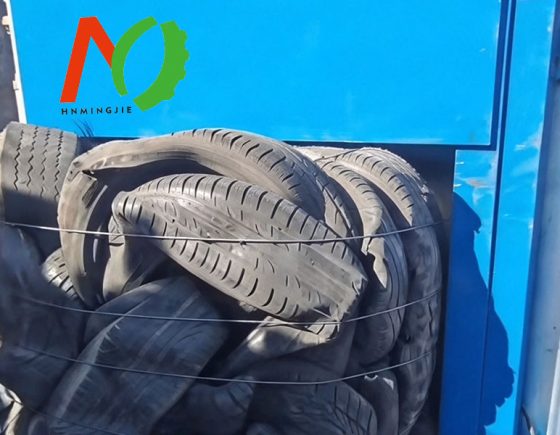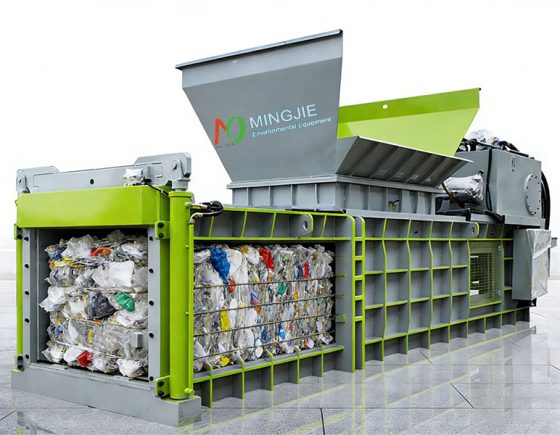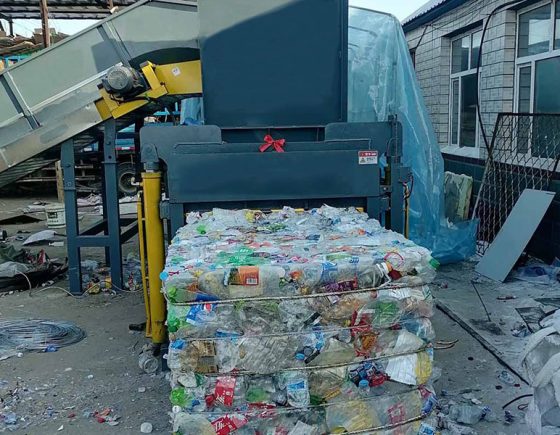
In solid waste recycling and processing, balers are core equipment for cost reduction and efficiency improvement. There are many types of balers on the market, including ordinary vertical balers and horizontal balers. Comparing various models, the all-steel plate heavy duty vertical balers have become the preferred durable model for customers.
Traditional low-cost vertical balers are prone to frame distortion and bale deformation after prolonged high-pressure operation. While horizontal models offer high output per unit, they require a large footprint and significant investment. The all-steel plate heavy duty vertical baler addresses these issues at their structural root.
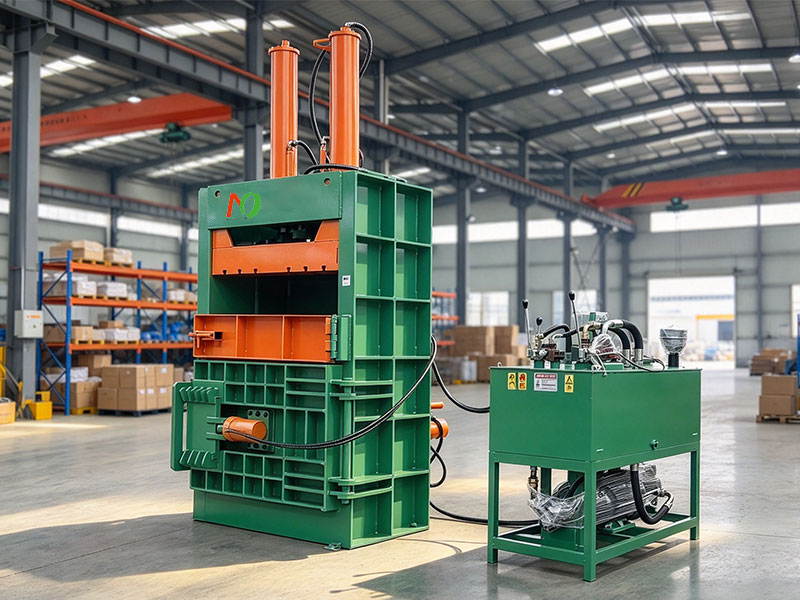
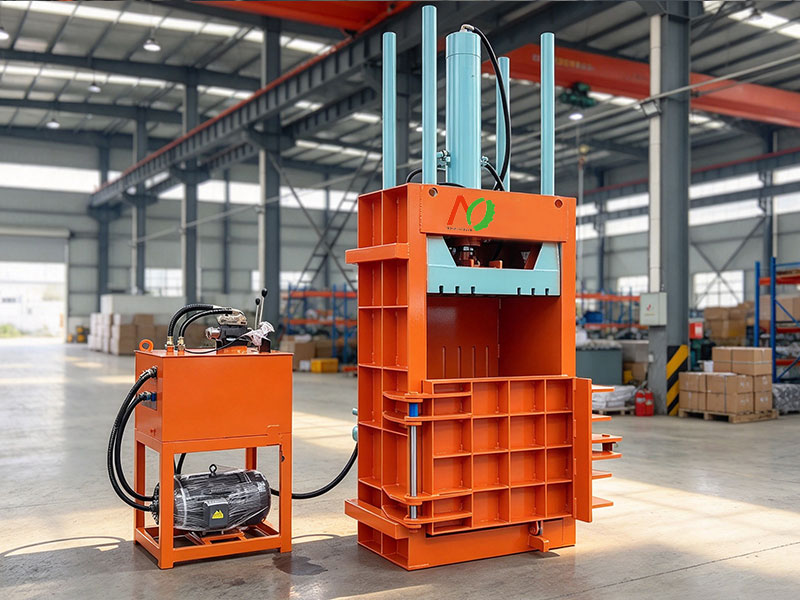
Advantages of Heavy Duty Vertical Balers
High Strength, Deformation Resistance, and Long Service Life
The frame and chamber of heavy duty vertical balers are welded from thickened wear-resistant steel plates. They can withstand continuous high-pressure impacts and long-term compression of thin metal materials, aluminum cans, hard plastics, and other hard materials.
The solid steel plate vertical downstroke baler structure has high rigidity and even stress distribution. The equipment maintains good accuracy even after more than ten years of stable use, resulting in lower long-term depreciation costs. The chamber is lined with thickened wear-resistant steel plates, resisting scratches and material impacts.
Compact Footprint and Strong Site Adaptability
Unlike the large layout of horizontal balers, vertical balers use vertical compression, occupying a small area and utilizing vertical space. They are suitable for space-constrained scenarios such as workshop corners, small recycling stations, warehouse corners, container factories, and small overseas baling sites. Vertical balers do not require heavy concrete foundations, making relocation and site transfer more flexible.
For overseas customers in Southeast Asia and Latin America, where factory rents are high and space is limited, the space advantage of the all-steel plate vertical downstroke baler is particularly prominent. The all-steel plate model is heavy, and the machine body does not wobble during operation, resulting in significantly better operational stability than ordinary vertical balers.
Wide Material Compatibility
Thanks to the high-strength support of the steel plate body, the all-steel plate vertical baler offers a wide range of pressure ranges. Heavy-duty vertical balers can compress soft materials such as cardboard boxes, plastic films, PET bottles, and textile scraps, as well as light metal waste such as aluminum cans, thin sheet metal, and aluminum shavings. Its versatility far exceeds that of ordinary light-duty vertical balers.
The heavy-duty vertical baler uses a vertical downward compression method, resulting in uniform material stress and high-density bales. It features a pre-installed standard rope groove, combined with a hydraulic door lock and hydraulic bale pushing structure, ensuring smooth bale output.
Low Failure Rate and High Safety
As long as the hydraulic components are functioning properly, the main frame of the all-steel plate vertical baling machine is not easily damaged. Failure points are concentrated in standard hydraulic parts, which are highly interchangeable and easy to purchase and replace. The machine body is reinforced with steel plates, and the door lock is equipped with hydraulic overload protection. Overpressure is automatically released, preventing safety risks such as box bursting and door forced open.
High Cost-Effectiveness
The all-steel plate vertical downstroke baler is priced lower than fully automatic horizontal balers of the same pressure rating. At the same time, its quality is far superior to ordinary vertical machines, balancing budget and durability. Mingjie Baler Factory can customize the box size, pressure, automatic bale pushing, hydraulic door opening, and other configurations according to customer needs.