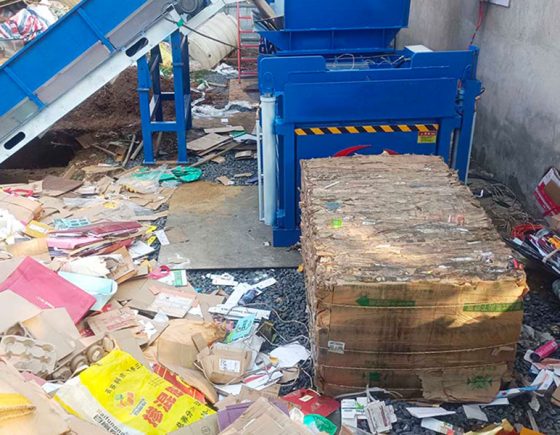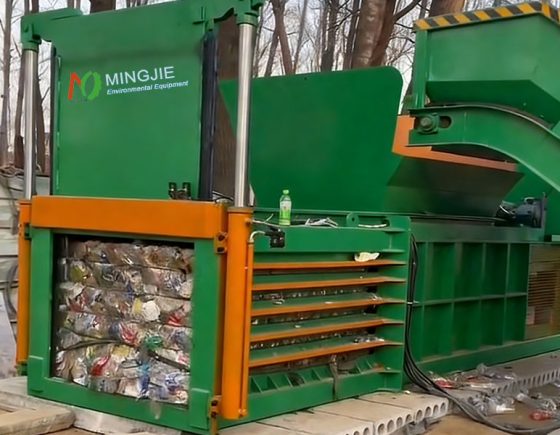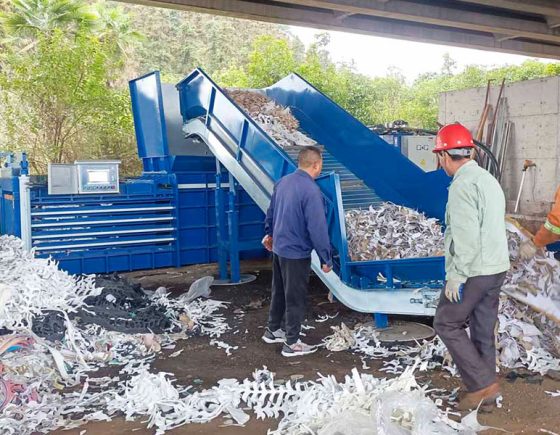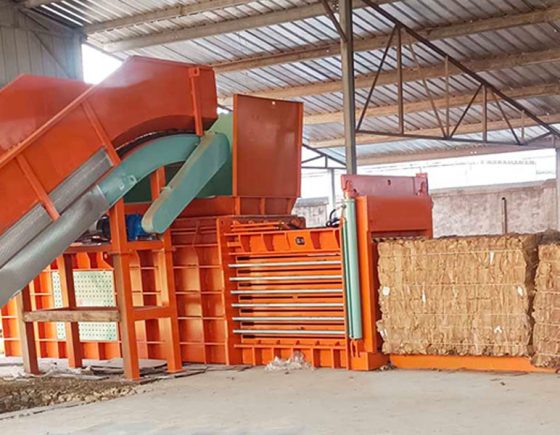
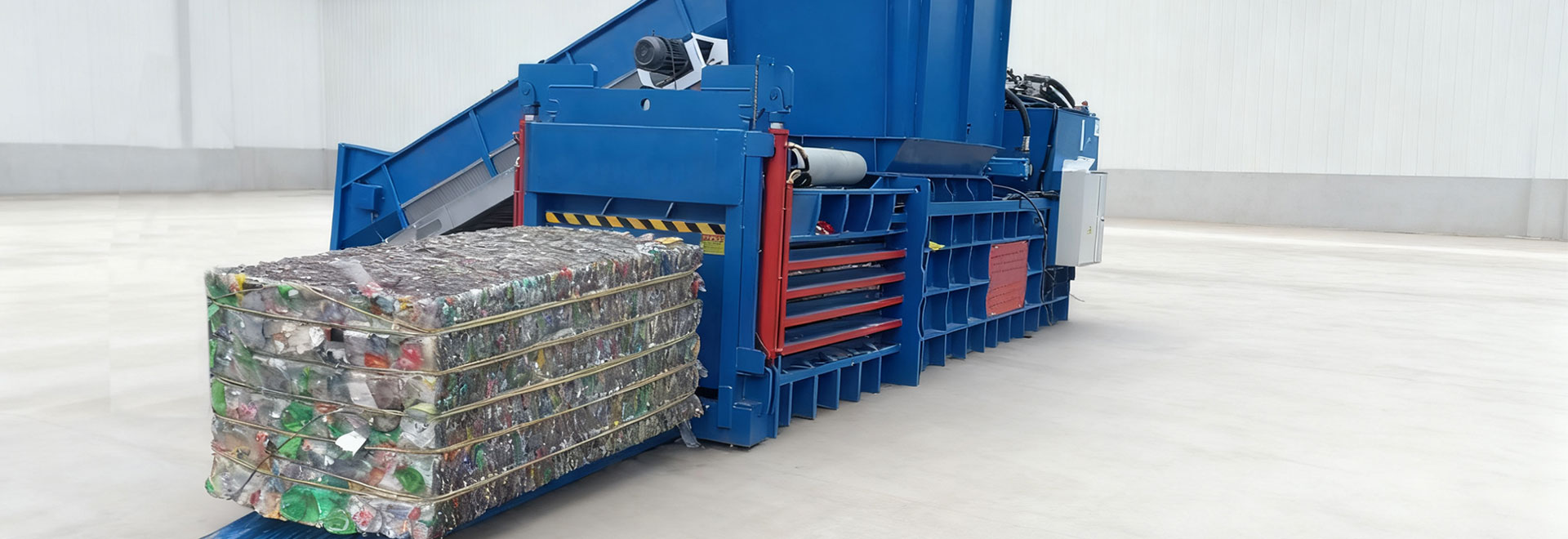
Horizontal plastic bottle pressing machine primarily uses high-pressure compression to compress plastic bottles into regular and dense cuboid blocks. This not only greatly reduces the volume of plastic bottles, but also brings many conveniences to their subsequent storage, transportation, and processing.
The high-efficiency compression capacity of horizontal balers has solved the core challenges of warehousing and transportation in the plastic bottle recycling industry. Horizontal plastic bottle compressors are one of the key pieces of equipment for improving the operational efficiency and economic benefits of the entire recycling chain.
Horizontal balers offer customized solutions for plastic bottles, taking into account their unique characteristics. Unlike waste paper processing, plastic bottles are hollow and easily deformed, so the plastic bottle pressing machine optimizes the compression chamber design and pressure parameters.
Plastic Bottle Recycling Process
A typical plastic flake recycling process includes sorting, washing, baling, and recycling.
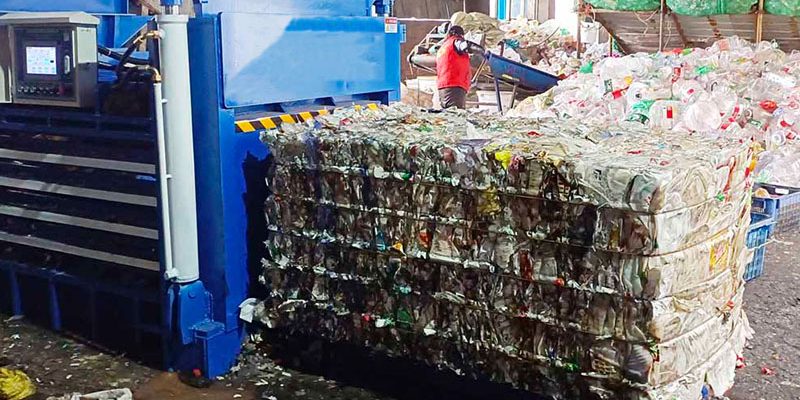
Before entering the plastic baler, plastic bottles need to undergo rigorous sorting. A crucial step is removing PVC bottles and caps, as these differ from common PET materials in melting point and chemical properties. Mixing them together will severely impact the quality of the subsequent recycled plastic. The cleaner the sorting, the higher the value of the baled material.
The plastic bottle baler machine uses a step-by-step compression method. It uses a pre-compression device to remove residual air from the empty bottle before performing a secondary compression. This ultimately compresses the plastic bottle into a high-density bale.
How to Choose a Plastic Bottle Pressing Machine
If you’re considering configuring a horizontal baler for your plastic bottle recycling business, consider the following:
Capacity Requirements
Balers come in various models, differing in compression chamber size, pressure output, and level of automation. You’ll need to select the appropriate model based on the quantity of plastic bottles you need to process.
Pre-processing and Sorting
The purity of the materials fed into the baler is crucial. Establish an effective sorting process to remove caps, labels, and other non-PET impurities as much as possible. This significantly increases the value of the produced plastic bottle bales.
Operating Costs and Maintenance
In addition to the price of the baler compressor, consider power consumption, strapping material consumption, and the daily maintenance and upkeep of the plastic bottle baler
Advantages of Plastic Bottle Horizontal Baler
01. Ultimate Compression
The biggest challenge in recycling plastic bottles is their extremely low density, leading to high transportation and storage costs. Horizontal balers achieve a volume compression rate of over 90% for plastic bottles. The compressed bales can be stacked and stored with excellent sealing.
02. Wide Applicability
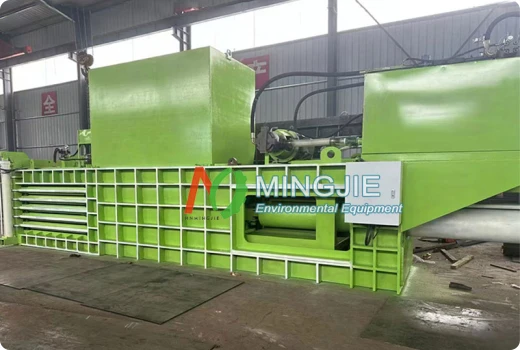
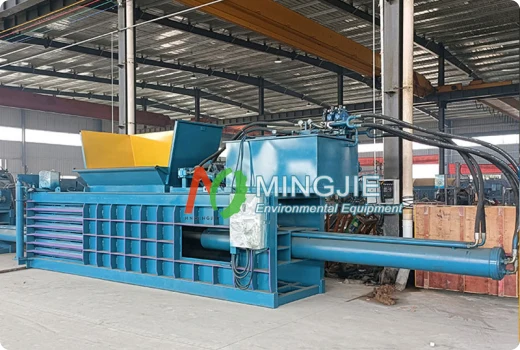
Different recycling scenarios have vastly different requirements for baling equipment. Horizontal balers offer multiple models to choose from and can be customized to cover all scenarios. They are suitable for small recycling points and large recycling plants.
03. Automated Operation
Horizontal balers are equipped with a PLC control system, enabling automatic feeding, automatic compression, intelligent strapping, and automatic discharge. The plastic bottle packaging process can be completed with just one person monitoring it.
04. Environmental Protection and Circular Economy
Horizontal balers are designed for energy conservation, reducing their own energy consumption. This reduces waste accumulation and pollution, improves transportation efficiency, and reduces carbon emissions. It is a crucial link in the plastic bottle recycling process.