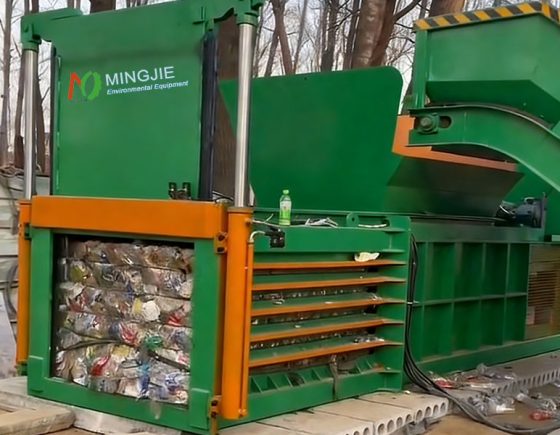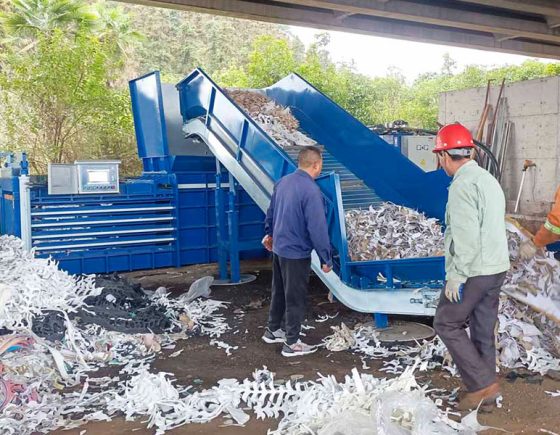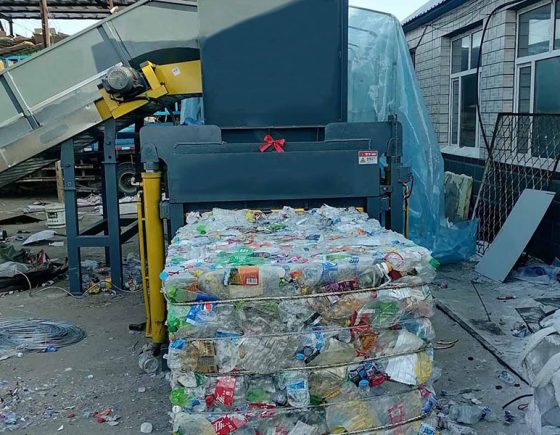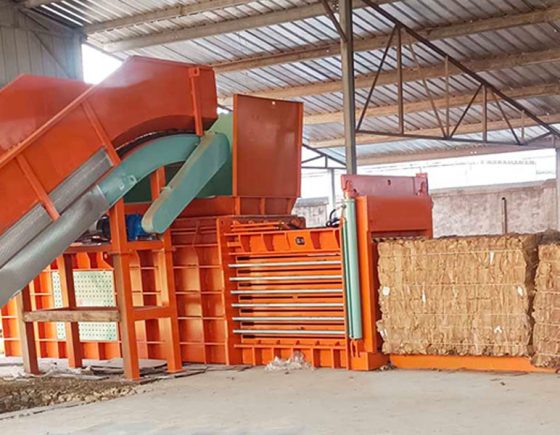
The horizontal baling press machine is driving the waste paper recycling industry’s transformation from extensive to large-scale operations. With its advantages of high-efficiency compression and automated operation, it is gradually becoming a core piece of equipment in the waste paper recycling industry.
The waste paper recycling industry has long faced three major challenges:
- High bulkiness of waste paper limits the loading capacity of a single transport vehicle, leading to high transportation costs.
- Limited storage space at waste paper recycling sites. Large accumulations of waste paper not only occupy space but also pose risks of moisture and contamination.
- Low efficiency and uneven baling density in manual baling, affecting the stability of subsequent waste paper reprocessing stages.

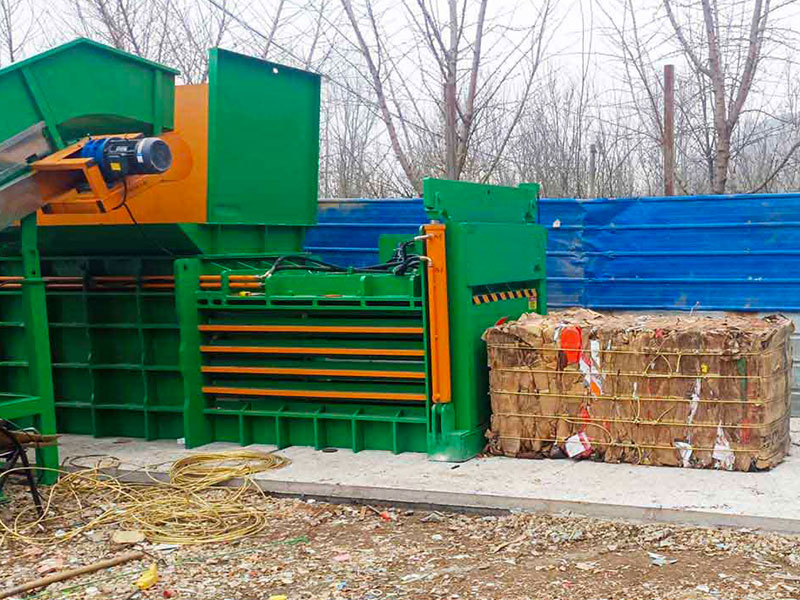
Solution for Waste Paper Recycling
Horizontal baling press machines offer a solution to the waste paper recycling problem.
01. Large-capacity waste paper compression capability.
Horizontal balers employ a horizontal compression design, allowing for larger-capacity waste paper feeding. A single horizontal baler can process tens to hundreds of kilograms of waste paper, compressing it into compact bales with a density of 300-500 kg/m³.
02. The bales are stackable, occupying minimal space.
Simultaneously, the compressed waste paper bales are easy to stack and store, reducing moisture loss.
03. High automation reduces labor requirements.
Furthermore, the automation level of horizontal balers significantly reduces reliance on manual labor. Equipped with a PLC control system, the horizontal baling press machine enables fully automated feeding, compression, and discharging. Compared to traditional manual baling, efficiency is increased by 3-5 times.
Applications of the Horizontal Baling Press Machine
Large-scale waste paper recycling and baling stations: The horizontal baling press machine can process large quantities of waste cardboard boxes and old newspapers from communities, supermarkets, and factories. The baled paper is then sold to large paper mills.
Large supermarkets/logistics centers: The horizontal paper baler can bale large quantities of waste cardboard boxes, reducing transportation frequency and maintaining environmental cleanliness.
Paper mills’ own waste recycling departments: It directly bales and recycles scraps and waste generated during production, reusing them for reuse in production.
For the waste paper recycling industry, the horizontal baler is more than just a compression device, it’s a value-enhancing machine. By reducing volume, saving space, increasing value, reducing labor costs, and ensuring safety, it significantly improves the economic benefits and operational efficiency of waste paper recycling businesses. Investing in a suitable horizontal baler is a strategically significant decision for any waste paper recycling company.

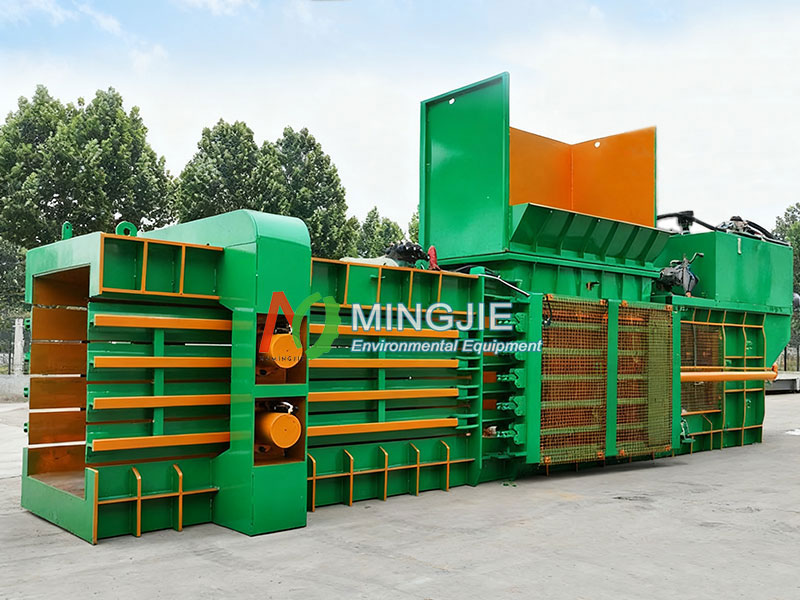
How to Choose the Right Horizontal Baler
When choosing a horizontal baler for your waste paper recycling business, key factors to consider include production capacity requirements, bale size and density, automation level, power requirements, factory space, and budget.
Production Capacity Requirements
Select the machine model based on the daily/monthly waste paper processing volume. For low-volume production, a semi-automatic horizontal baler is suitable. For high-volume production, a fully automatic horizontal baler is recommended.
Automation Level
Semi-automatic horizontal balers use manual control for the cycle and automatic bundling. Fully automatic horizontal balers use PLC control to automatically complete the entire cycle.
Bale Size and Density
This determines the machine size and pressure tonnage. It should match the receiving standards of downstream paper mills.
Power Requirements
Confirm whether the factory’s power capacity can meet the baler’s power requirements.
Factory Space
Ensure sufficient space for machine installation and adequate operating areas for feeding and unloading bales.
Budget
Horizontal balers have a wide price range; investors need to balance cost with long-term returns.