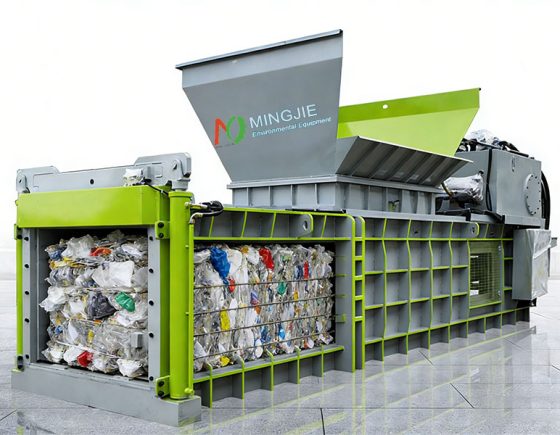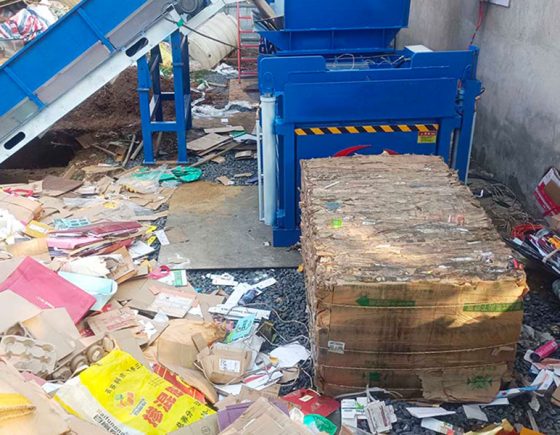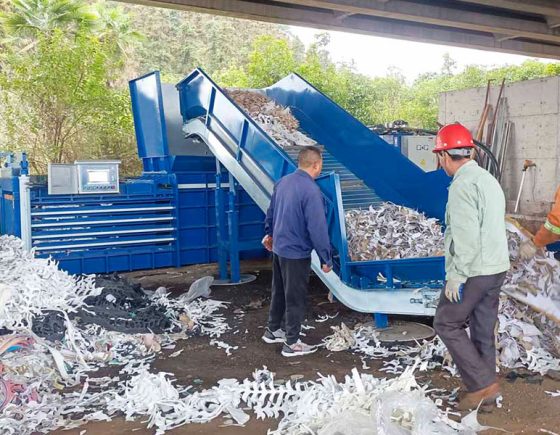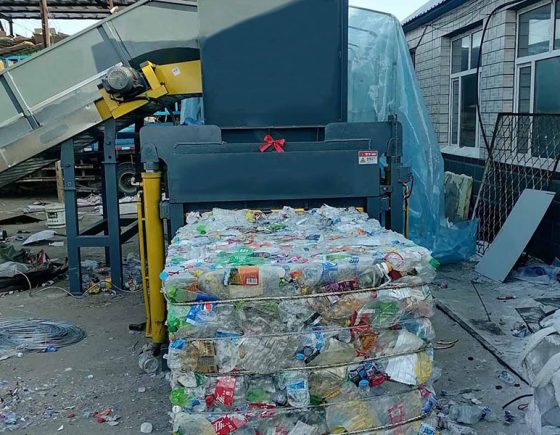
Hydraulic plastic baling machine utilizes a hydraulic system to generate powerful compression force, compacting loose, bulky waste plastics into regular blocks. The volume of the plastic is significantly reduced after baling, facilitating stacking, loading, unloading, and long-distance transportation. Hydraulic baler machines offer high-pressure compression, high efficiency, and stability. They are an indispensable core piece of equipment in the plastic recycling industry chain.
Hydraulic baling machine offers excellent material handling flexibility, capable of handling a wide range of plastic waste materials. It can process various common waste plastics, including PET bottles, beverage bottles, PE film, agricultural film, packaging film, PP woven bags, jumbo bags, HDPE plastic drums, plastic crates, etc.
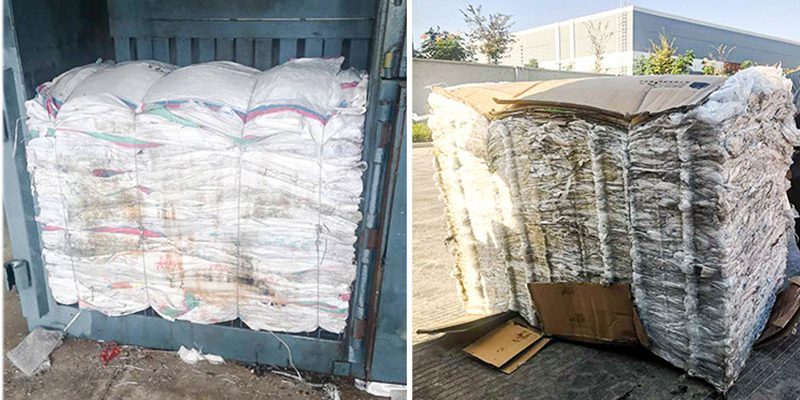
Hydraulic Baler for Soft Plastic
Soft plastic films, such as common greenhouse films, food packaging films, and shopping bags.
The hydraulic plastic baling machine can overcome the soft nature of plastic films, compressing them layer by layer, making them tightly packed together to form a regular bale.
For soft plastics with a cushioning bubble structure, such as bubble wrap, the hydraulic baler can adjust the pressure and compression stroke to squeeze out the air inside the bubbles, achieving efficient compression.
Hydraulic Baling Machine for Hard Plastic
Hard plastic bottles, such as mineral water bottles, beverage bottles, and oil drums, as well as plastic scraps generated during industrial production.
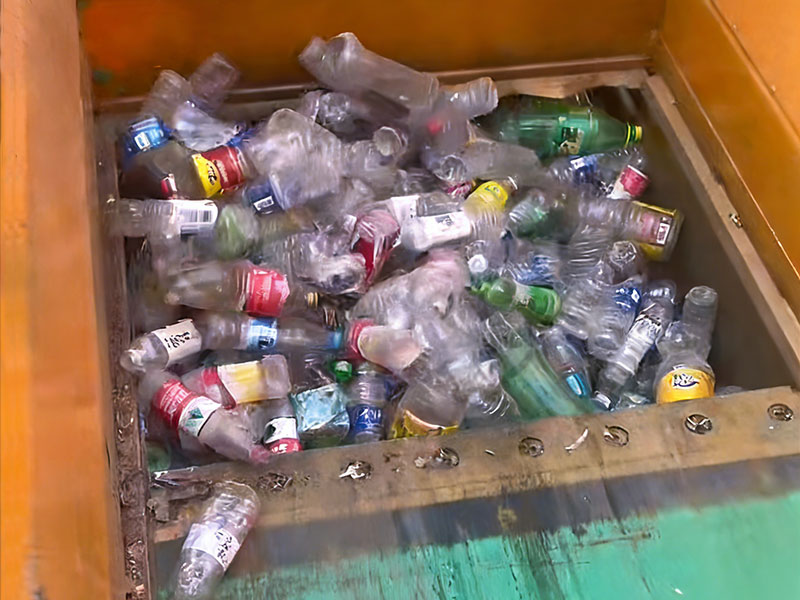
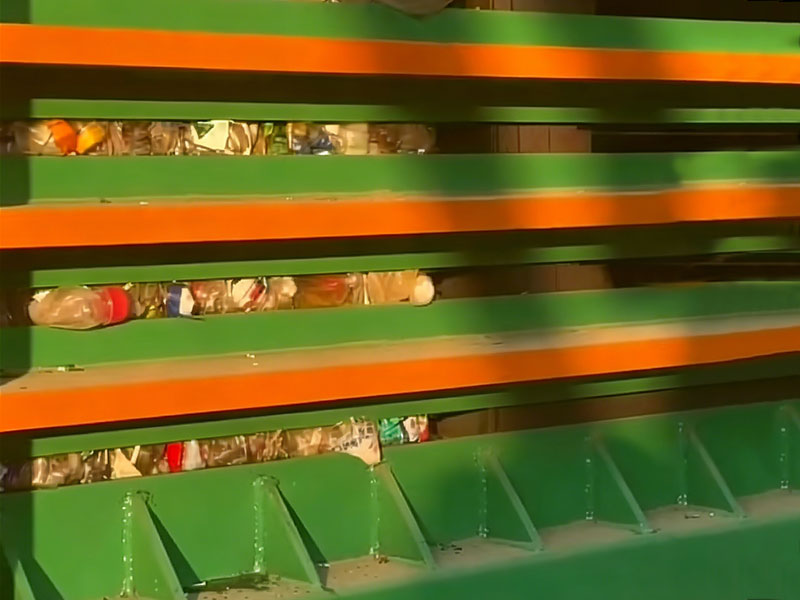
These plastic bottles and scraps often have varying shapes, but the hydraulic plastic baler is not limited by their shape. Through the reasonable design of the feeding hopper and the all-round pressure applied by the press head, they can be compressed into compact blocks.
The hydraulic plastic bottle baler can adjust the pressure parameters of the hydraulic system according to actual conditions, precisely compressing scraps of different hardness and thickness. This ensures that the baling effect meets the requirements for subsequent storage, transportation, and reprocessing.
Hydraulic plastic balers have broad applicability to different types of plastic waste and play a vital role in plastic waste processing scenarios across various industries. These include waste plastic recycling centers, plastic processing and recycling plants, municipal solid waste treatment centers, and industrial and commercial waste recycling systems.
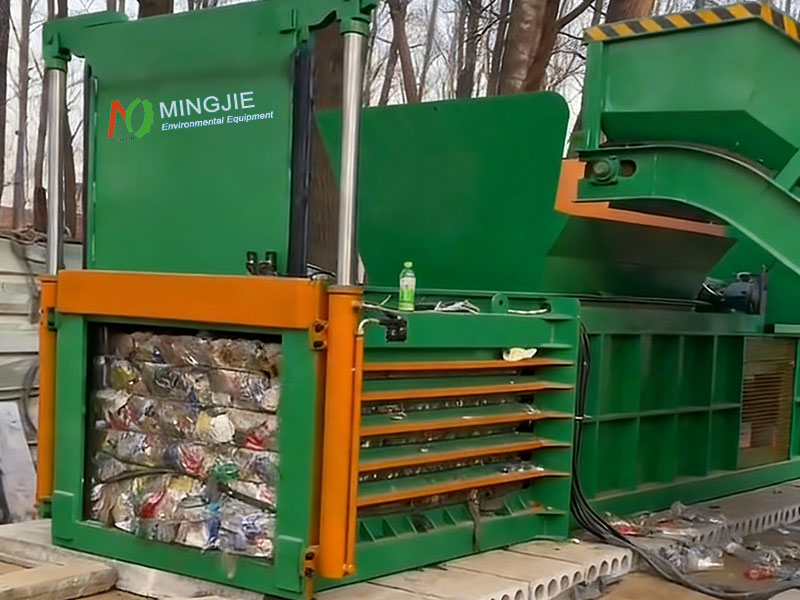

Key Features of Hydraulic Plastic Baling Machine
High-Pressure and High-Efficiency Compression Performance
Hydraulic plastic baling machine performs exceptionally well in terms of compression performance, and its core advantage stems from the powerful output capability of the hydraulic drive system. The hydraulic system can stably output pressures up to tens of megapascals, which translates into a pressing force of several tons or even tens of tons.
Compared to traditional mechanical balers or manual baling methods, hydraulic plastic balers offer significant advantages in compression efficiency and energy consumption control. The hydraulic plastic baler provides powerful and stable compression force. Through reasonable hydraulic system design and electrical control, it achieves controllable energy consumption during the compression process.
In large-scale continuous operations, hydraulic plastic horizontal baler can complete more baling tasks per unit of time. This also avoids energy waste caused by frequent starting and stopping, effectively reducing production costs.
Safe and Stable Operating Characteristics
The hydraulic PET bottle baling press machine demonstrates high safety and stability during operation. The hydraulic system itself is equipped with advanced overload protection devices. This effectively prevents damage to critical components due to excessive pressure, extending the equipment’s lifespan.
During operation, the hydraulic oil acts as a transmission medium, effectively cushioning and absorbing the impact forces generated by pressure changes. This results in smoother movement of the press head and reduces wear on mechanical components.
The lower failure rate also significantly reduces the maintenance costs of the hydraulic plastic baler. Compared to the complex mechanical structure of mechanical balers, the hydraulic system of the hydraulic plastic baler is relatively simple.
It has fewer critical components, and the connections between components mostly utilize hydraulic pipelines and connectors with excellent sealing performance. This reduces the probability of failures caused by loose or worn mechanical connections.