Waste paper baler machine plays a crucial role in the entire environmental protection system. From the perspective of resource conservation and environmental management, waste paper balers are a powerful tool for protecting forest resources.
As is well known, the main raw material for paper comes from trees. Producing one ton of virgin paper often requires cutting down a large number of trees. The baling press machine can recycle waste paper, allowing it to be reused. Recycling one ton of waste paper saves approximately 17 trees. This figure clearly demonstrates the significant role of waste paper baling in reducing deforestation and maintaining ecological balance.


If waste paper is not effectively recycled, it will lead to a series of serious environmental problems. Landfilling occupies a large amount of valuable land resources. Furthermore, waste paper decomposes slowly underground and may produce harmful substances, such as leachate. Incineration releases large amounts of harmful gases, exacerbating air pollution.
However, after being baled, waste paper enters a formal recycling process and is transformed into recycled paper. Waste paper baler machine greatly reduces these potential environmental pollution risks, resulting in bluer skies and cleaner land.
Raw Materials of Waste Paper
- Dedicated recycling points set up in communities provide a convenient place for residents to dispose of waste paper. The paper baler can be used to compress and package old newspapers, discarded books and magazines, and used cardboard boxes.
- Businesses generate a considerable amount of waste paper, including discarded documents and papers from office areas, and packaging waste paper from production processes. Some large companies even establish long-term partnerships with professional recycling companies to ensure timely and effective recycling of waste paper.
- Recycling centers act as resource hubs, collecting waste paper from various sources. They perform initial sorting and consolidation at the recycling center, laying the foundation for subsequent recycling processes.

How Press Baler Recycles Waste Paper
Once waste paper is collected, it enters the baling stage, a crucial step in the waste paper recycling process. This is primarily achieved using a baler. Mingjie hydraulic baler machine uses a motor to drive an oil pump. The hydraulic oil is injected into the cylinder, generating powerful pressure. This pressure pushes the piston to compress the waste paper in the baling chamber.
- During operation, the waste paper is first neatly placed on the baler’s worktable and positioned correctly.
- Then, the baler’s parameters, such as pressure and bale size, are set according to the type of waste paper and baling requirements.
- Next, the baler is started. As the machine operates, the waste paper is tightly compressed under pressure.
- Finally, the compressed waste paper bales are secured with manual or automatic strapping, forming sturdy bales, completing the baling process.
Waste Paper Baler Machine Supplier
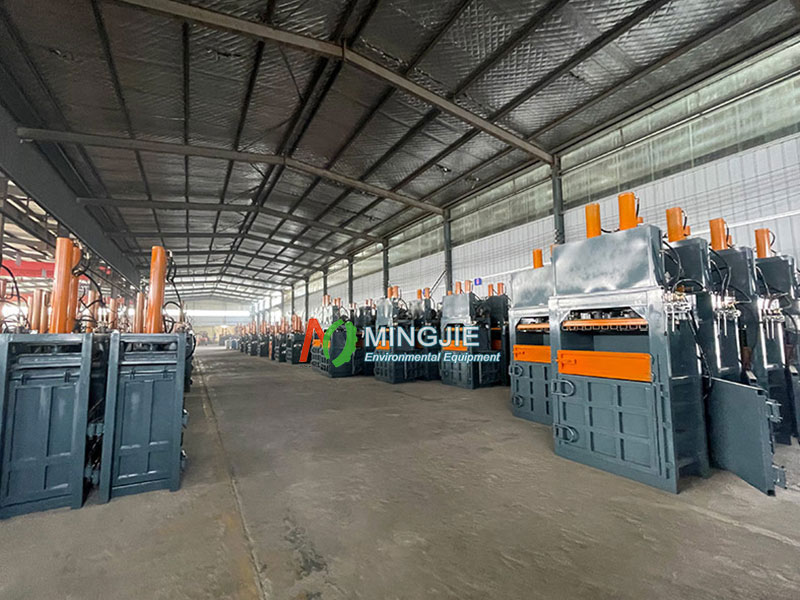
In the field of waste paper baling, baling equipment is a crucial tool. Different types of baling machines, with their unique features, play an indispensable role in the waste paper recycling process. Mingjie Company is a professional baler machine supplier, we offer Horizontal Large Cardboard Baler and Vertical Small Waste Paper Baling Machine.
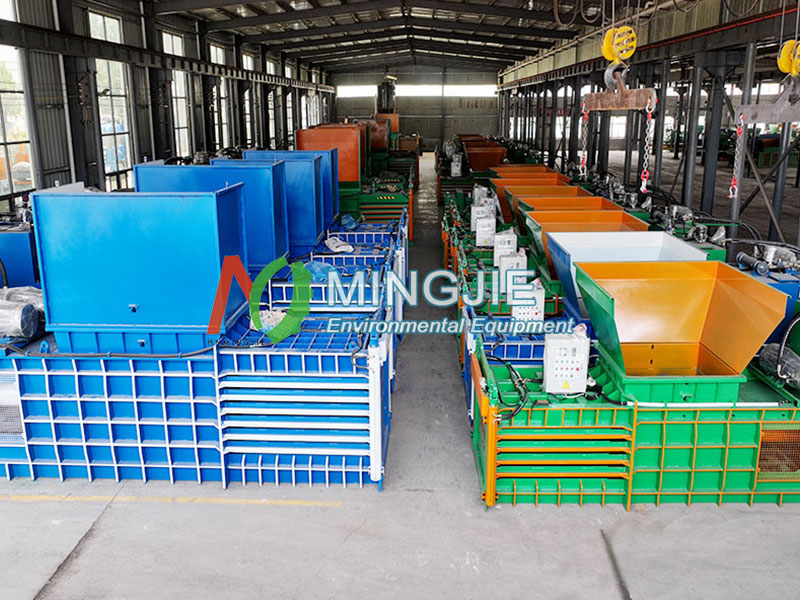
Horizontal Large Cardboard Baler
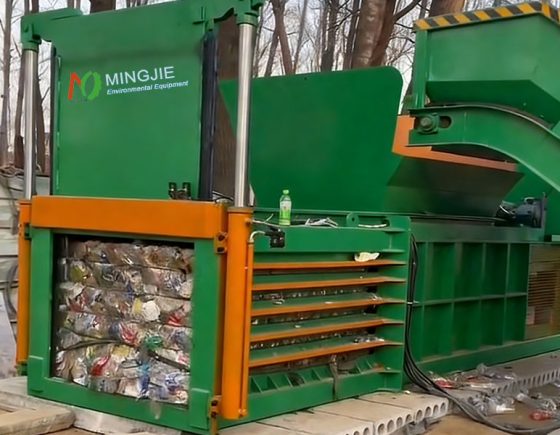
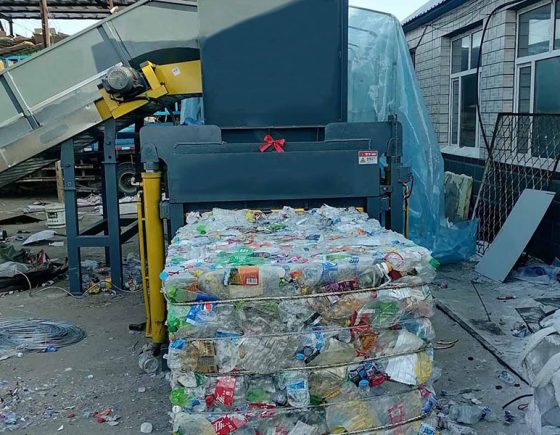
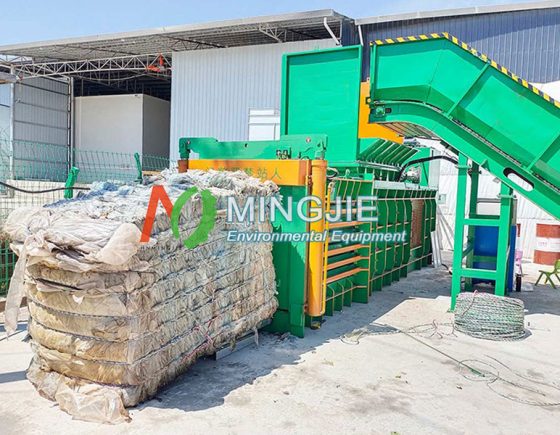
The horizontal baler features a unique structural design, presenting an overall horizontal form. This design results in a larger volume and a longer machine body. The compression action is primarily accomplished by a main compression cylinder operating along the horizontal direction. This powerful cylinder can generate enormous thrust, ranging from tens to hundreds of tons.
The advantages of the horizontal baler are significant. It boasts extremely high baling efficiency, capable of baling large quantities of waste paper in a short time. Its level of automation is also relatively high. With just one button press, it can automatically complete the entire cycle from loading and compression to strapping and bale ejection.
Vertical Baler for Waste Paper
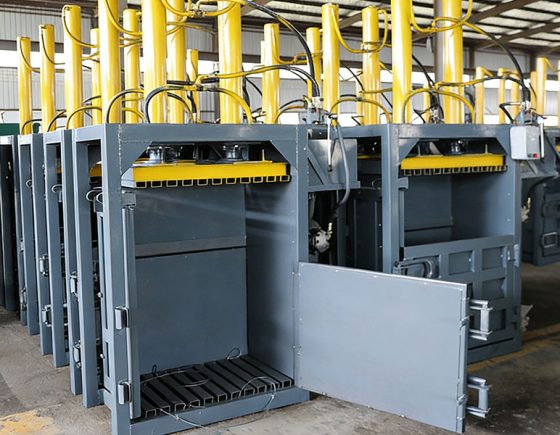
Vertical balers utilize a vertical compression method. The equipment is relatively tall but occupies a smaller footprint. This characteristic gives it a significant advantage in spaces with limited area.
In terms of bale size, vertical balers typically produce relatively smaller bales of paper. This makes them more suitable for processing small quantities of loose waste paper. Their compression force generally ranges from 10 to 50 tons, and their baling efficiency is relatively low. However, they are easy to operate, usually employing semi-automatic or fully automatic control.