As a key piece of environmental protection equipment, the Recycling Baler has become an effective solution for handling various types of solid waste. It can compress various loose waste materials (waste paper, plastics, metals) into compact blocks or bales.
The Recycling Baler significantly reduces the volume of waste, improving the efficiency of transportation and storage, and laying a solid foundation for subsequent recycling and reuse. Recycling Balers can be used in urban waste treatment centers, factory production workshops, material centers, and recycling companies.
How Does a Recycling Baler Work?
The working process of recycling baler mainly consists of three stages: material feeding, compression molding, and packaging and output.
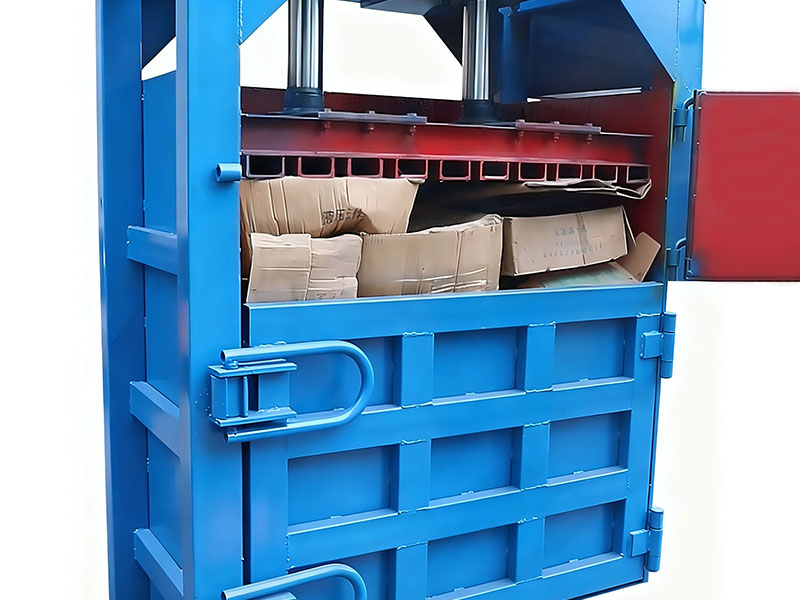
The recycling baler is equipped with a powerful hydraulic system that provides immense pressure for the compression process. In the compression chamber, the material is subjected to pressure from different directions.
For example, a vertical baler compresses the material vertically from top to bottom, while a horizontal baler pushes the material horizontally into the compression chamber from one side. As the pushing plate continuously advances, the material is gradually squeezed in a limited space, and its volume rapidly decreases.
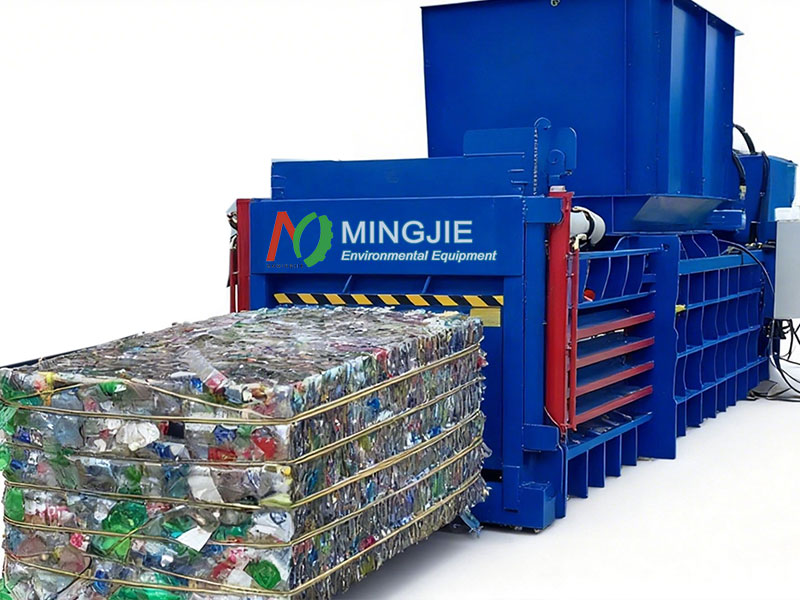
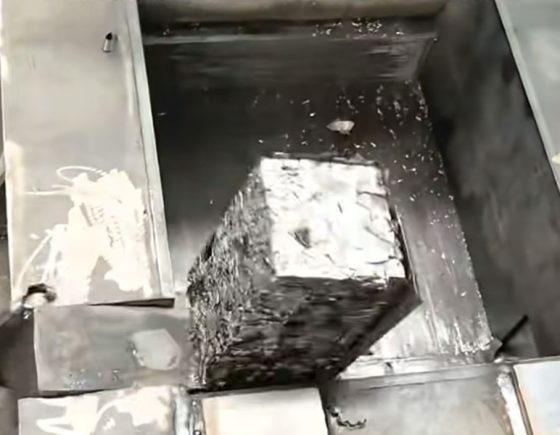
During this process, the pressure can reach tens or even hundreds of tons, tightly compressing the loose materials together. The waste materials finally form a block with a certain shape and density. For some special materials, such as metal materials, even higher pressure may be required to ensure effective compression.
Once the material is compressed and molded, the packaging and output stage begins. At this point, the compressed block of material needs to be packaged and secured for easy transportation and storage. Steel or plastic straps are wrapped around the compressed block and tightened to prevent it from falling apart during handling.
Solid Waste Recycling Baler Machine Types
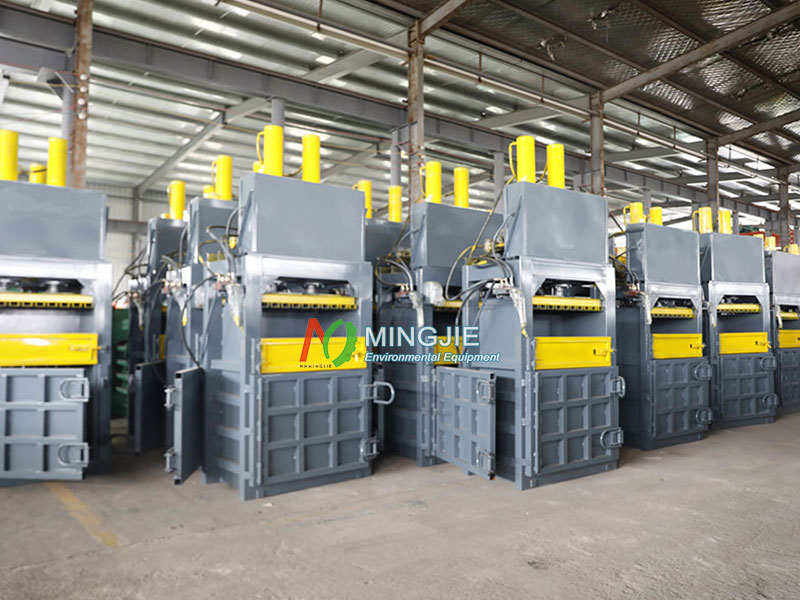
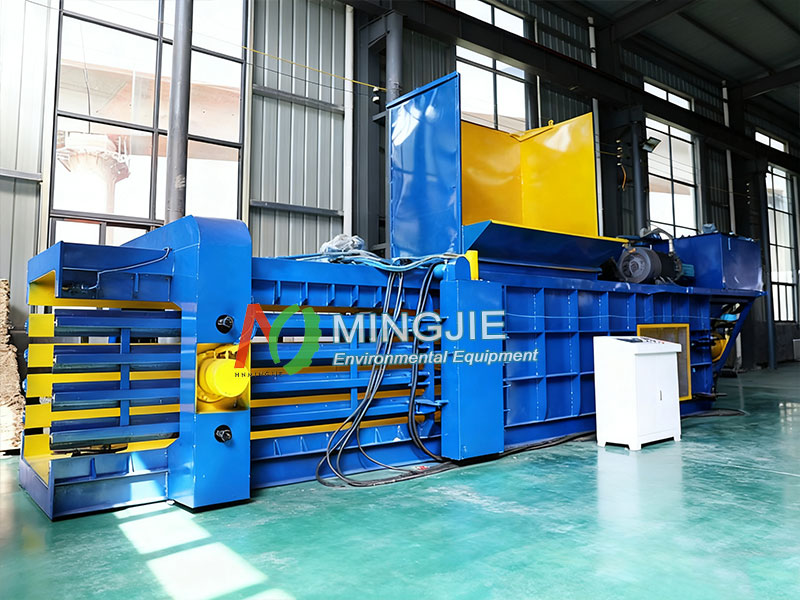
Mingjie baler machines for solid waste recycling are mainly divided into vertical balers and horizontal balers according to the direction of material compression.
Vertical Baler For Sale
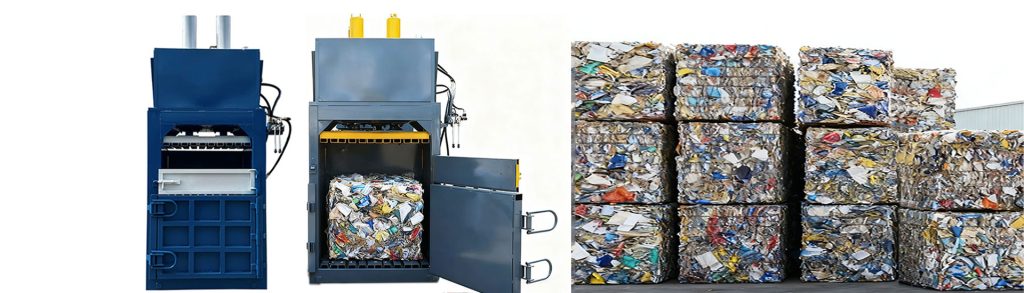
Vertical recycling balers have a relatively small footprint, which gives them a significant advantage in spaces with limited area. From the perspective of pressure direction, the pressure of a vertical baler is vertically downwards. This pressure method allows it to easily handle lighter, fluffy materials such as waste clothing, plastics, and cardboard.
Vertical baler machines are relatively simple to operate. They are easier to use for small recycling companies or individual recyclers.
However, vertical recycling balers also have certain limitations. Due to the limitations of their structure and pressure method, their single-batch processing capacity is relatively small.
Horizontal Baler For Sale
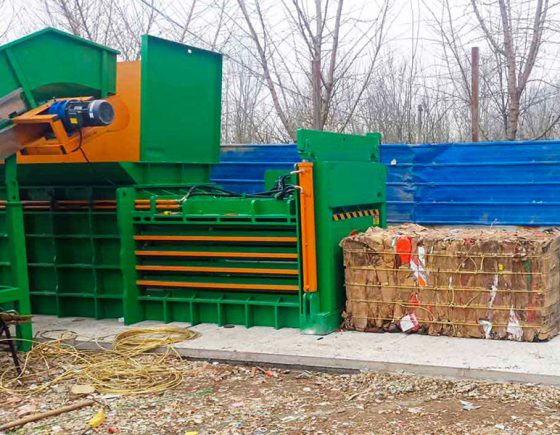
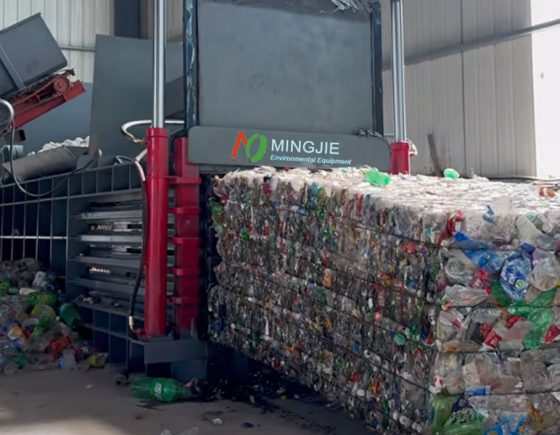
Horizontal baler machines play an important role in the recycling field, with their ingenious structural design and efficient and unique working method. Structurally, they usually have a longer horizontal compression chamber, where the material is compressed.
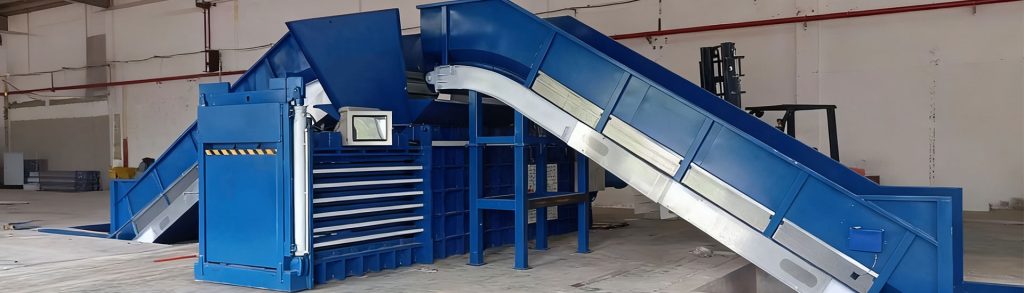
This structure allows it to accommodate larger volumes of material. Furthermore, the material is subjected to more uniform pressure during the compression process. The large hydraulic system is the core power source of the horizontal baler, generating powerful pressure to ensure that the material is tightly compressed.
Compared with vertical recycling balers, the advantage of horizontal recycling balers lies in their stronger processing capacity, enabling them to meet the needs of larger-scale material processing.
Horizontal recycling balers are suitable for large-scale recycling operations, such as large waste paper recycling plants, plastic recycling factories, and metal recycling plants. Horizontal balers have efficient processing capabilities and a large material capacity. They can quickly compress these waste materials into compact blocks, facilitating subsequent transportation and storage.