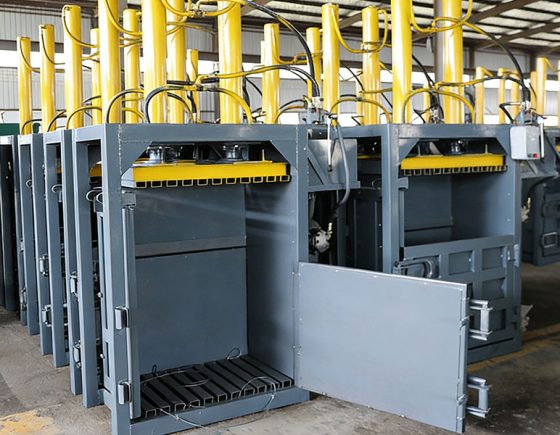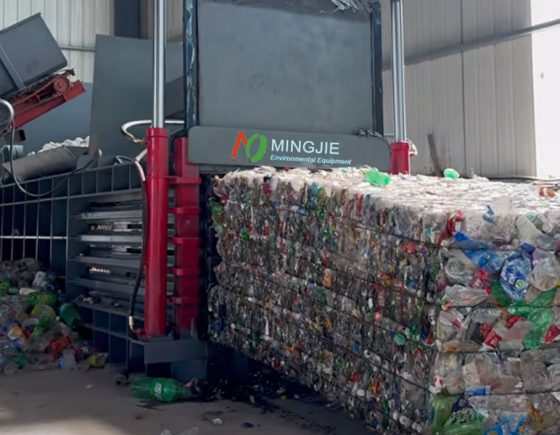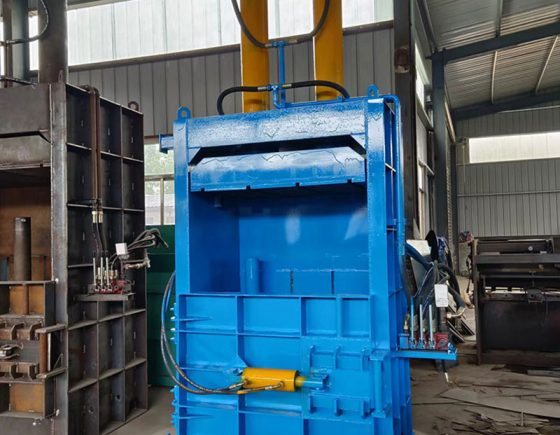
In the recycling system of renewable resources, the efficient processing of metal scrap is a crucial link in achieving resource circulation. Horizontal metal baler is specialized compression and forming equipment designed for metal scrap such as waste steel, aluminum, and copper.
Horizontal metal baler utilizes a horizontal compression structure design, and powerful hydraulic drive capabilities to transform loose and disordered metal scrap into regular and compact bales. The horizontal baler machine significantly improves the efficiency and economics of metal recycling, becoming indispensable core equipment in industries, such as steel smelting, non-ferrous metal processing, and renewable resource recycling.

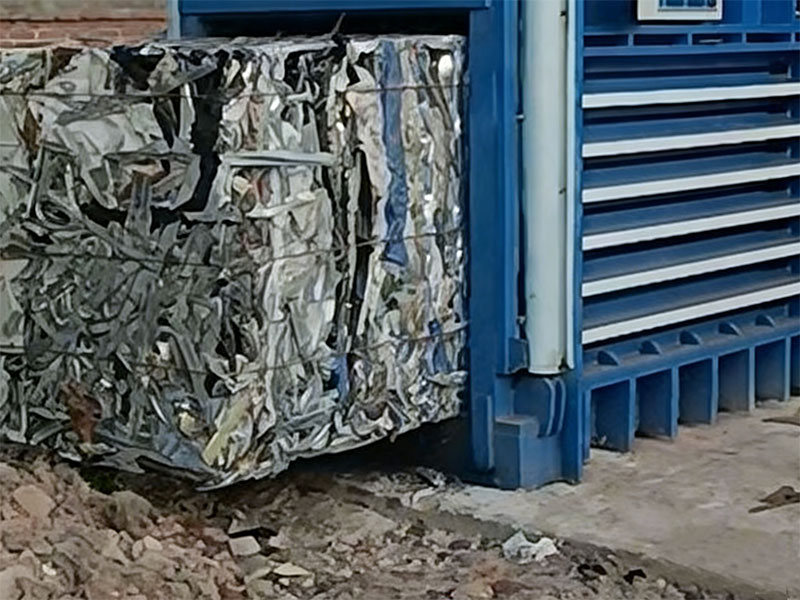
How Does a Horizontal Metal Baler Work?
The core working principle of a horizontal metal baler is based on hydraulic transmission. Through precise mechanical structures and intelligent control, it completes the entire process from feeding to bale ejection.
Feeding Stage
Operators can feed scrap metal materials into the horizontally positioned compression chamber manually or via a conveyor belt. This horizontal feeding design not only reduces the operating height but also accommodates various feeding methods, making it particularly suitable for large-scale continuous operation.
Pre-compression and Main Compression Stages
Some models are equipped with a pre-compression device that initially compresses the material, increasing the filling rate of the compression chamber. The compression chamber door is then closed and locked. The main compression cylinder, driven by the hydraulic system, extends horizontally, applying high pressure (tens to hundreds of tons) to the material. It utilizes the plastic deformation characteristics of the metal to compress the loose material to a set density.
Baling Stage
After compression, the baling stage begins. A manual or automatic strapping mechanism feeds special baling straps through the compressed material. These straps are securely fastened by twisting or welding, usually with 1-3 straps to ensure bale stability.
Bale Ejection and Reset
The bale ejection cylinder pushes the formed metal bale out of the compression chamber. All cylinders then retract to their original positions, awaiting the next feeding cycle. The entire process can be automated through a PLC control system, allowing for one-button operation.
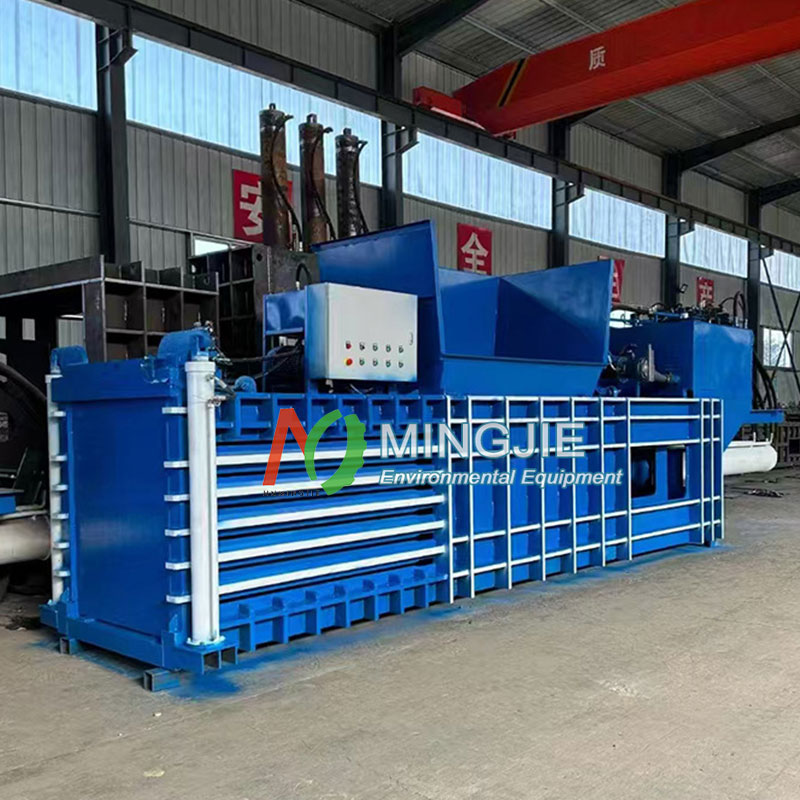

Core Components of Horizontal Metal Baler
The horizontal baling machine consists of five core components: a robust main frame, a compression system, a hydraulic system, an electrical control system, and auxiliary mechanisms.
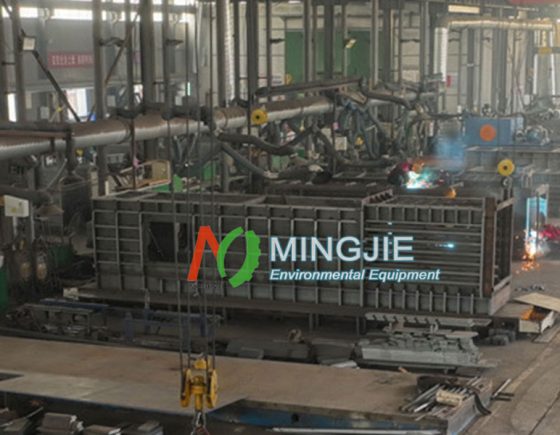
- The robust main frame, constructed from high-strength welded steel, is capable of withstanding the immense pressure generated during the compression process, ensuring the stability and safety of the equipment.
- The compression system includes a horizontally positioned compression chamber, a compression head, and multiple functional hydraulic cylinders. The size of the compression chamber determines the specifications of the final bale. The material and design of the compression head and cylinders directly affect compression efficiency and pressure output.
- The hydraulic system, as the power core of the equipment, consists of a motor, hydraulic oil pump, control valve group, and oil tank. It is responsible for converting mechanical energy into hydraulic energy, providing stable power output to various actuators. Its performance directly determines the compression force and smooth operation of the equipment.
- The electrical control system, centered around a PLC programmable controller, is equipped with an operating panel, sensors, and other components. It enables precise control of the equipment’s operating process, pressure parameters, and cycle speed. It also features fault alarms and safety interlocks.
- The auxiliary mechanisms include a wire tying mechanism, and bale discharge device. The wire tying mechanism ensures that the bales are tightly bound and do not fall apart. The bale discharge device uses a push rod or conveyor belt to automatically transport the bales, improving operational continuity.