

Introduction
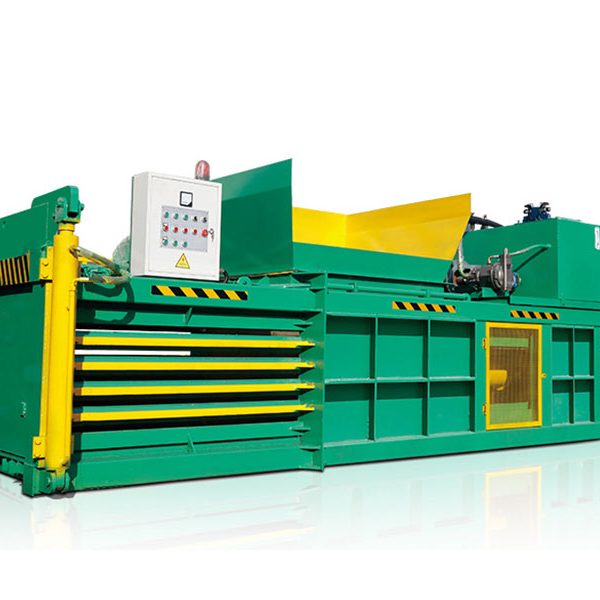
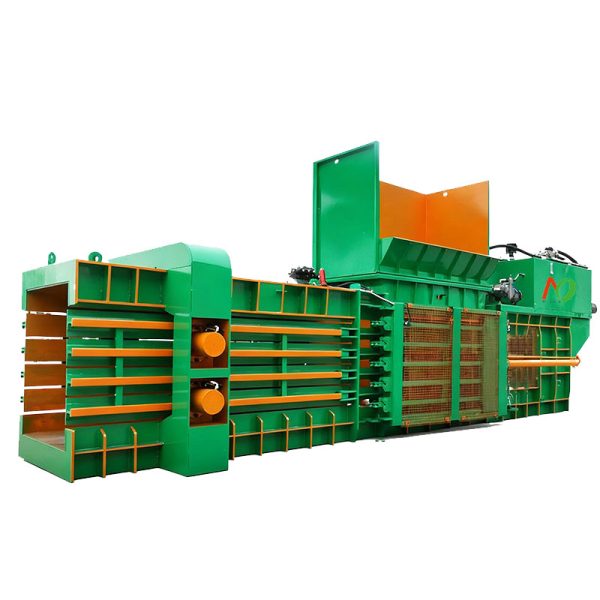
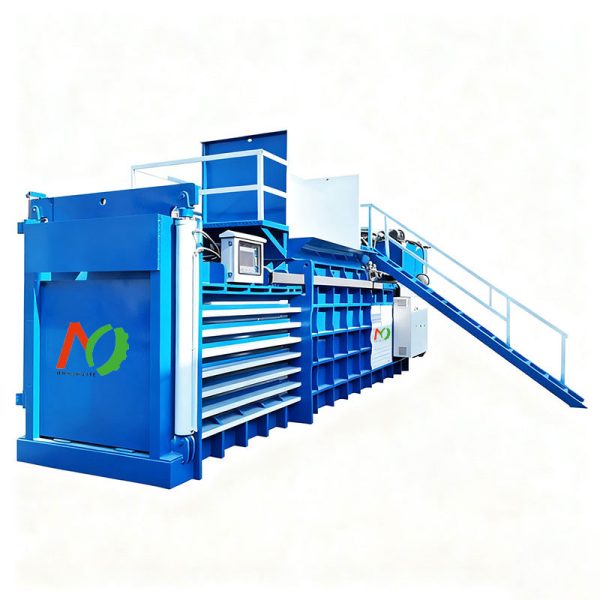
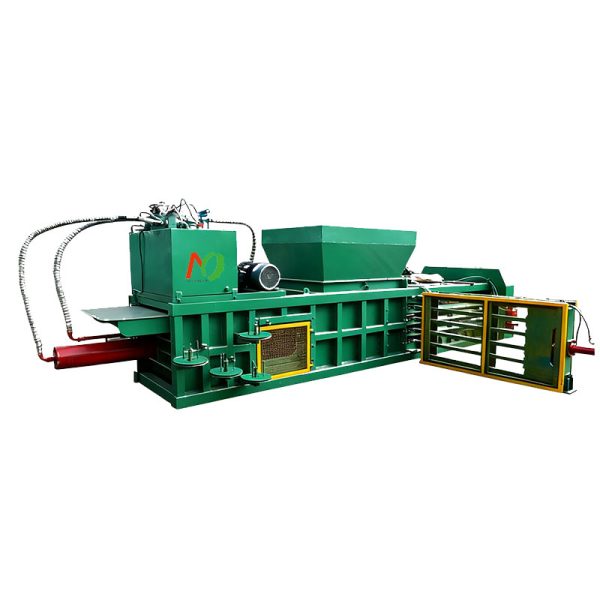
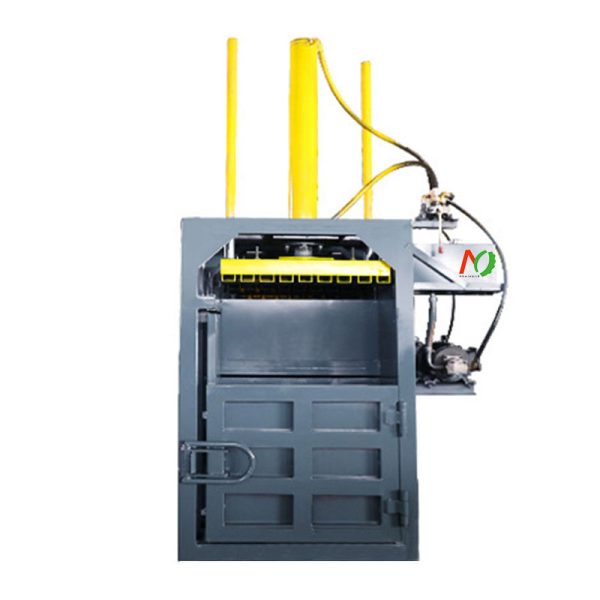
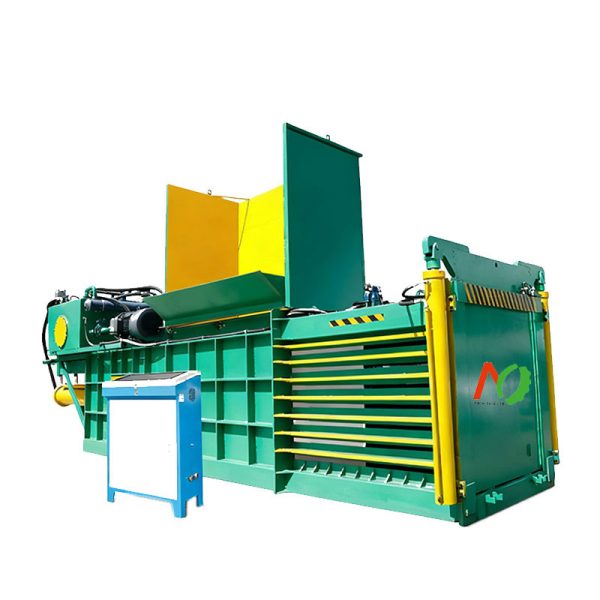
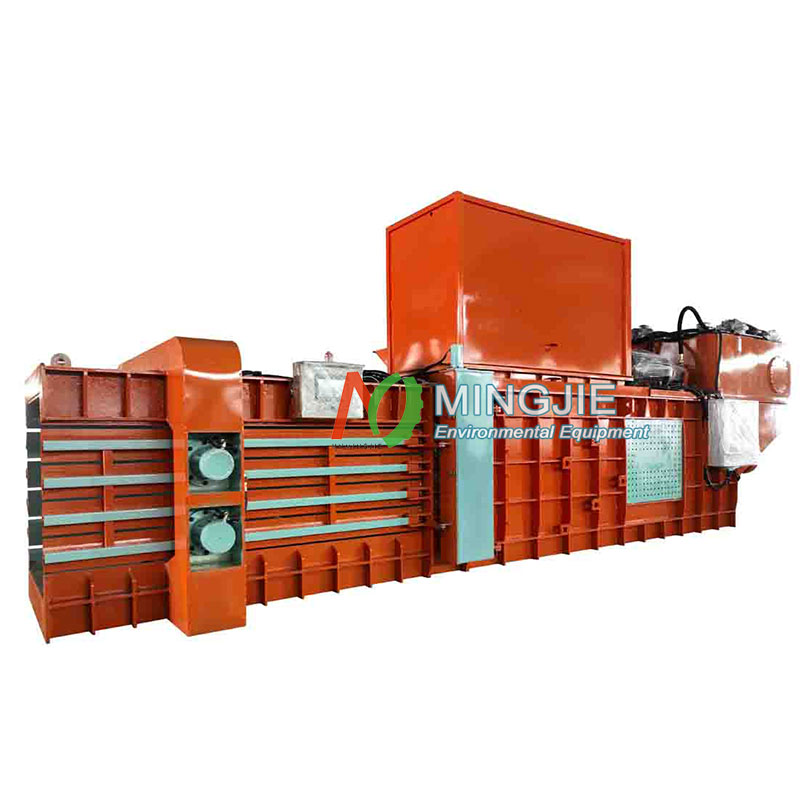
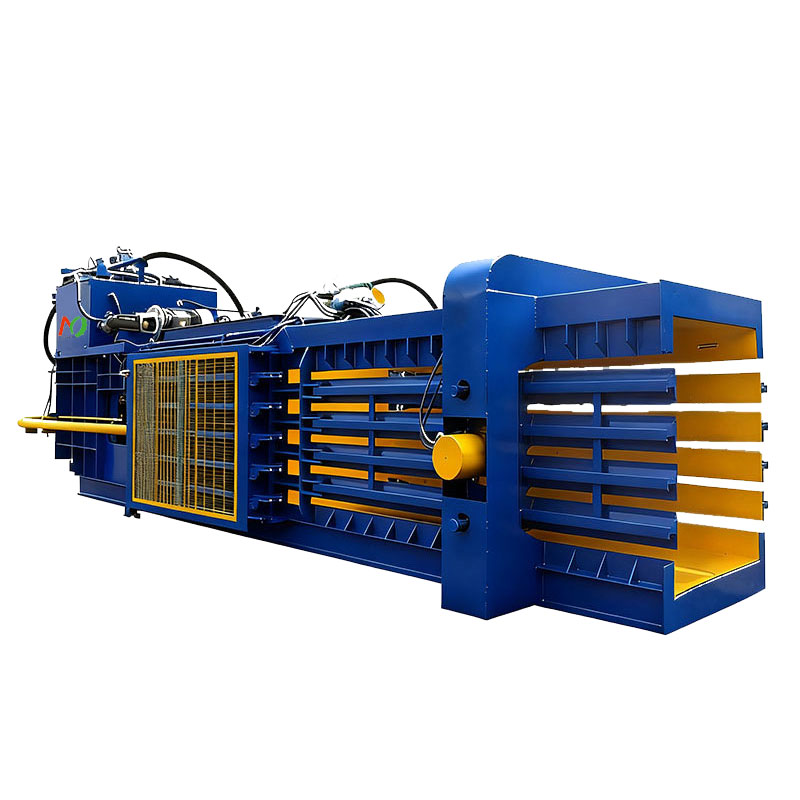
Fully automatic horizontal baler is high-end, core equipment in the solid waste recycling industry. It is based on semi-automatic horizontal balers and feature highly integrated automated control and sensing technologies.
The fully automatic horizontal baler utilizes a programmable logic controller (PLC), sensors, and a hydraulic system to work together. It provides a continuous, intelligent baling process, from loading, compression, wire threading, and baling to packing.
Main Structure

Automatic Feeding System
A conveyor belt auA conveyor belt automatically transports material to the baler’s hopper.tomatically transports material to the baler’s hopper.
Chain Feeder
Located above the hopper, it presses material evenly and quantitatively into the main compression chamber.
Automatic Strapping System
The baler automatically performs a series of operations, including wire feeding, threading, twisting, and cutting.
Bale Discharge System
A hydraulic ejector ejects the compressed bales from the baling box.
Bale Discharge Conveyor
Automatically transports bales to designated storage locations.
Advanced Sensing and Electronic Control System
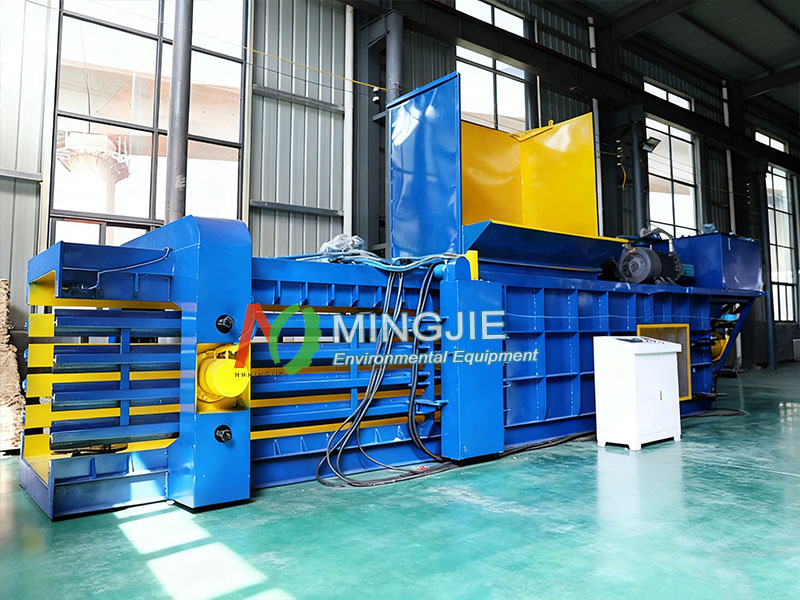
Users set parameters (bale weight, dimensions, number of strapping lanes, etc.) via a touchscreen. A PLC controls all operational sequences.
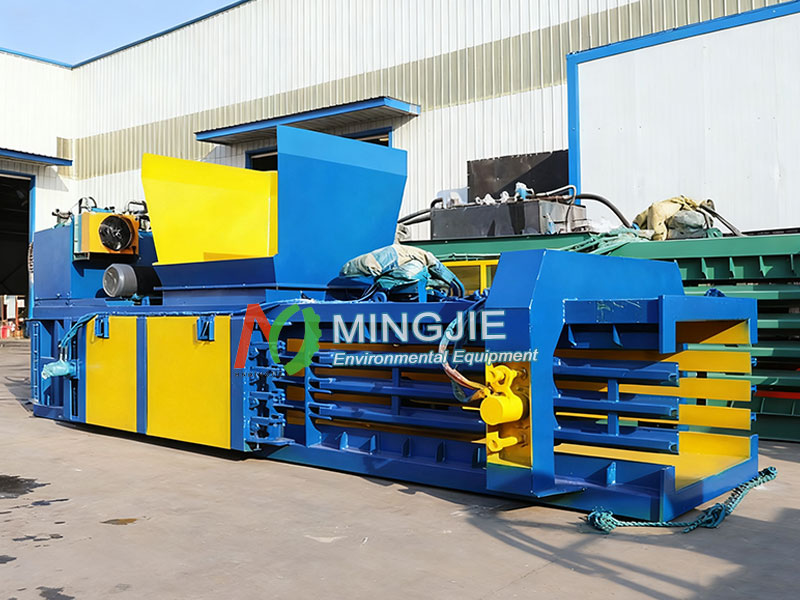
Parameters
| Automatic Horizontal Baler | Model | Power | Cylinder Diameter(mm) | Machine Size(mm) | Packed Size(mm)(AdjustableLength) | Oil Pump | Conveyor Belt(mm) |
| MJF-60T | 18.5kw | 230 | 7200*2300*2600 | 1100*850(W*H) | 80 | 5000 | |
| MJF-80T | 22kw | 245 | 7200*2300*2600 | 1100*850(W*H) | 125 | 5000 | |
| MJF-160T | 45kw | 351 | 9600*2300*3600 | 1100*1250(W*H) | Twin-disc pump | 9600 | |
| MJF-200T | 37kw+37kw | 377 | 10000*2300*3500 | 1100*1250(W*H) | Twin pump | 9600 |
Application
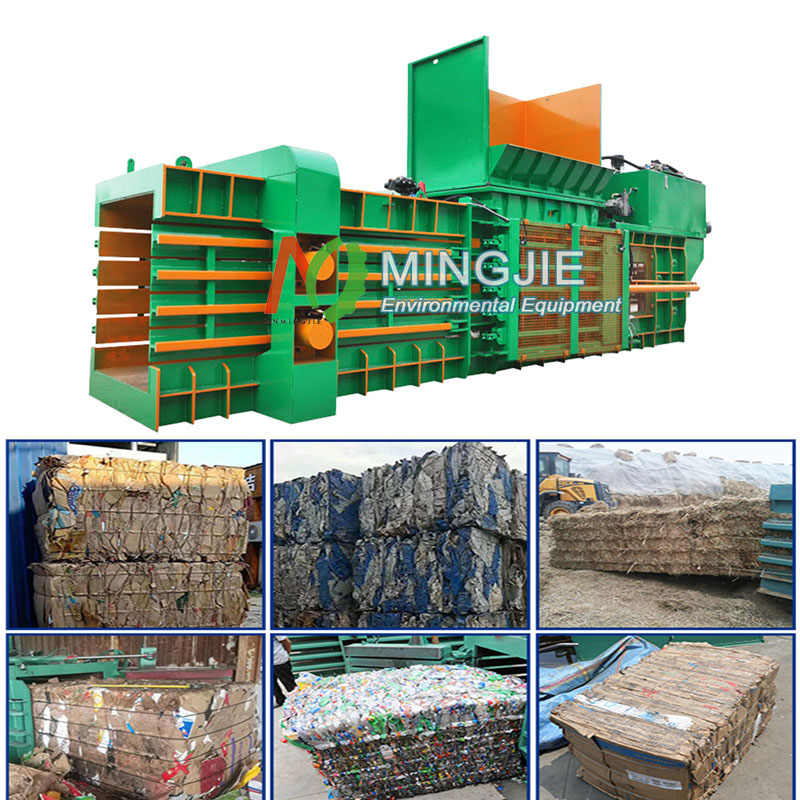
Fully automatic horizontal balers can efficiently compress and bale loose materials, reducing warehousing and transportation costs and improving material recycling rates. They are suitable for large-scale, continuous production scenarios.

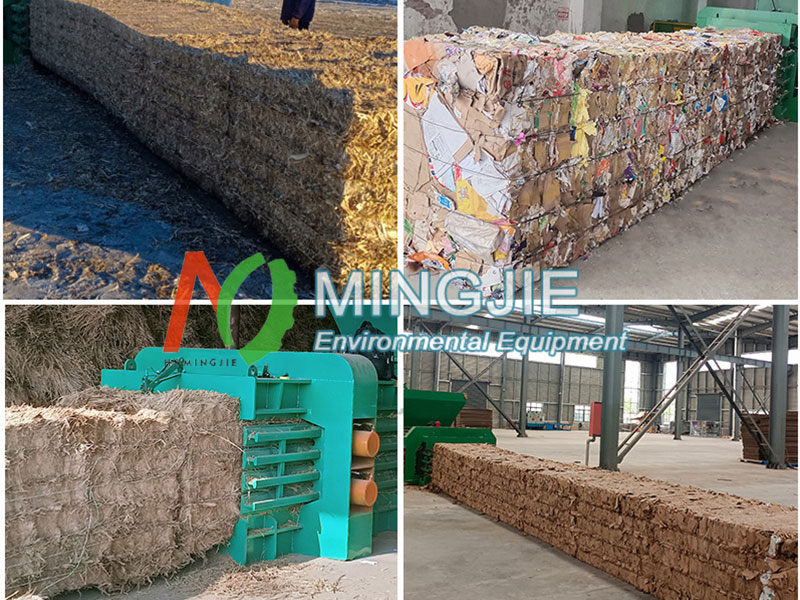
Application Industries of Automatic Horizontal Balers
01. Agriculture
Automatic horizontal balers are used to process corn stalks, hay, and silage, compressing them into high-density bales. This facilitates long-term storage and long-distance transportation. They are suitable for the large-scale processing needs of large-scale farms and planting bases.
02. Waste Recycling Industry
Automatic horizontal balers can compress recyclable materials such as waste paper, cardboard boxes, plastic bottles, scrap metal, and old clothing. They reduce volume for easier stacking and storage, lowering losses and logistics costs during transportation. They are primarily suitable for waste recycling stations and recycling plants.
03. Manufacturing
Automatic horizontal balers are used to bale production waste, product packaging materials, and some finished products. This improves workshop cleanliness and logistics turnover efficiency, making them suitable for electronics factories, garment factories, hardware factories, etc.
04. Logistics and Express Delivery Industry
Automatic horizontal packing machines can compress and pack express parcels and e-commerce returned goods. This reduces the space occupied during transportation and lowers express transit and delivery costs. They are suitable for large express sorting centers and e-commerce warehousing and logistics parks.
Advantages
Extremely High Production Efficiency
24/7 operation with short cycle times and output far exceeding that of semi-automatic horizontal baling machines.
Significantly Reduced Labor Costs
No manual feeding, threading, bundling, or bale handling is required. The entire process only requires one person to oversee, addressing labor shortages.
Uniform Bale Quality
Fully automated control ensures highly consistent size, density, weight, and binding strength for each bale. This facilitates material recycling and transportation.
Highly Safe Operation
Employees no longer need to work in hazardous areas such as the compression and bundling areas. This significantly reduces the risk of workplace injuries.
Intelligent Management
Modern fully automatic machines often include data statistics, such as output counters, fault alarms, and remote monitoring. This facilitates production management and maintenance at waste recycling plants.