PET bottles are highly resilient and difficult to compress. Consequently, PET bottle baler differs from those used for materials like cardboard or plastic film. Selecting the appropriate PET bottle baler directly impacts bale density, transportation costs, and recycling revenue.
Choosing PET Bottle Baler Based on Processing Volume
Processing volume is the starting point for selecting the right PET bottle baler. Because PET bottles are bulky and have low density, calculations should focus on the volume of bottles to be processed per hour, rather than just their weight.
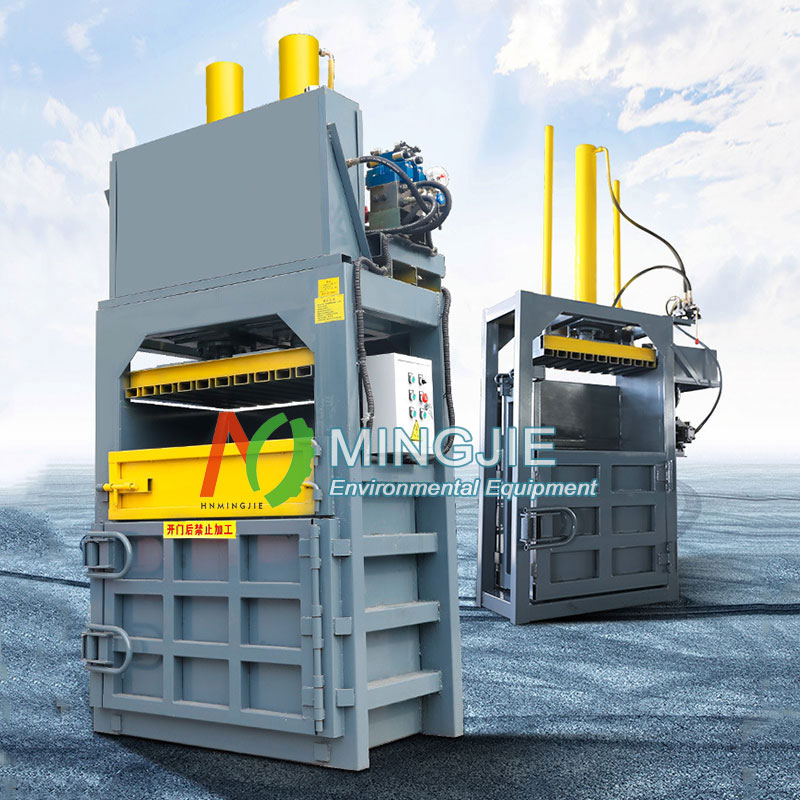
- 0.1–0.4 tons/hour: Suitable for small vertical balers.
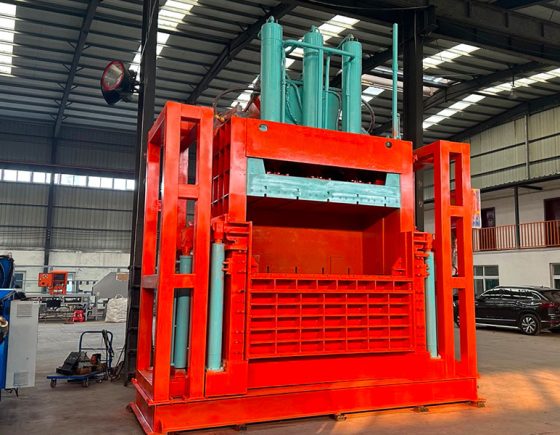
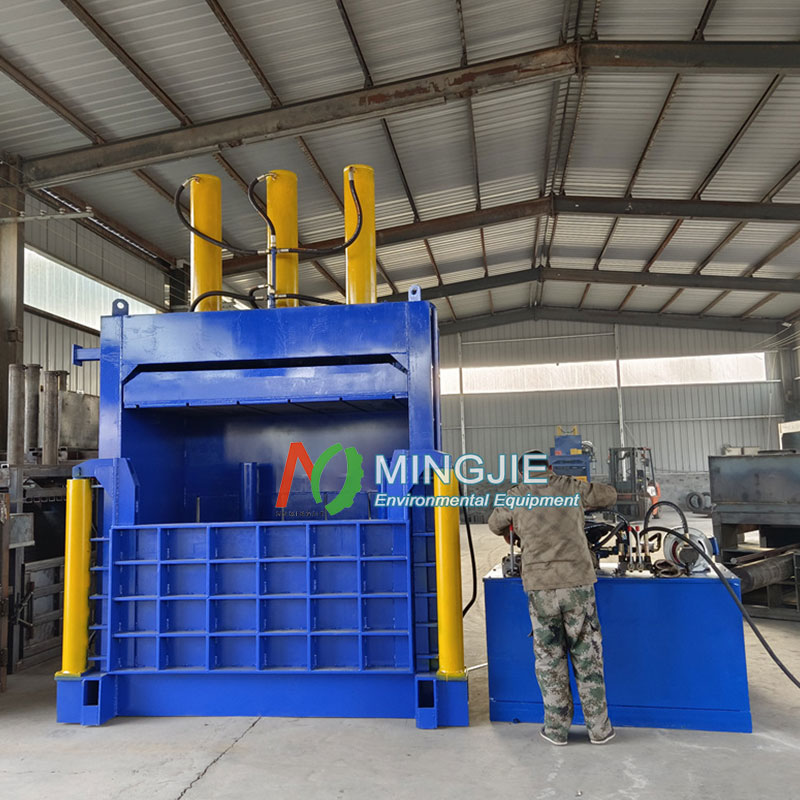
- 0.25–0.65 tons/hour: Long-stroke vertical balers (single- or dual-cylinder). These are the most common models used in small-to-medium-sized recycling facilities.
- 0.4–1.2 tons/hour: Heavy-duty vertical balers, which offer high compression force and produce stable, solid bales.
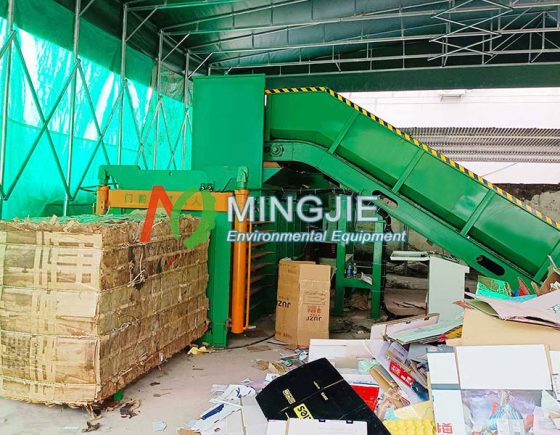
- 1.2–3 tons/hour: Semi-automatic horizontal balers, which require manual tying. These can be integrated with conveyor belts for feeding.
- 3 tons/hour and above: Fully automatic horizontal balers (with automatic tying capabilities), designed for large-scale recycling plants and operations with continuous-feed production lines.
Choosing Between Vertical and Horizontal Balers
Vertical plastic baler machines feature a small footprint, low investment cost, simple operation, and easy installation. They are ideal for facilities with limited floor space, intermittent feeding requirements, or constrained budgets.
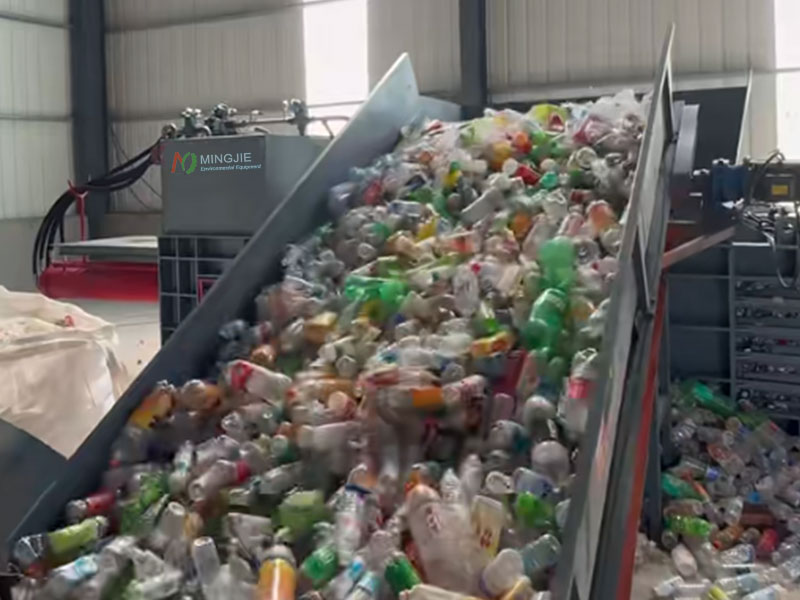
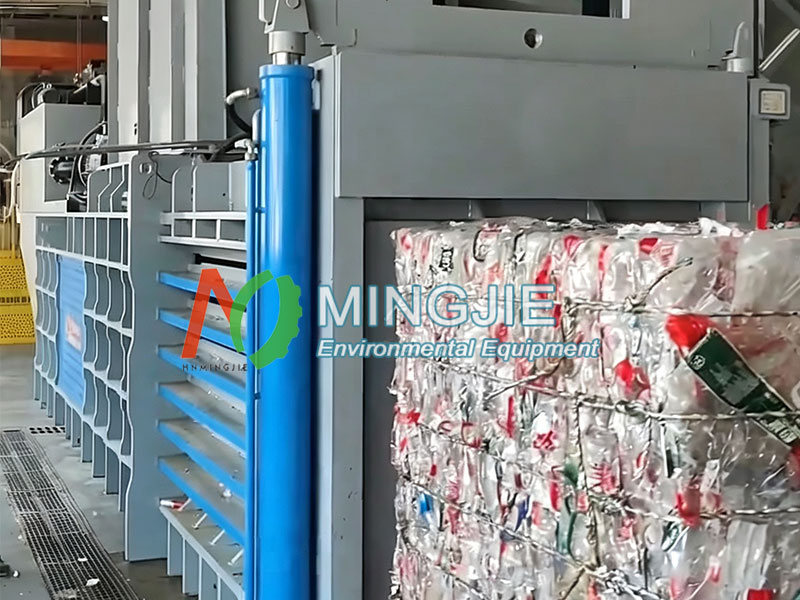
Horizontal PET bottle baling press machines allow for continuous feeding via a conveyor belt and offer higher throughput. They can be equipped with automatic strapping systems, ensuring more consistent bale density. Furthermore, they integrate easily into shredding and sorting production lines.
Key Technical Parameters for PET Bottle Baling
The elastic “spring-back” characteristic of PET plastic is the primary challenge in its recycling and processing. The following parameters determine whether the resulting bales are sufficiently compact.
- Compressive Force (Tonnage)
For whole PET bottles, 60 tons is the minimum standard. Many buyers prefer vertical balers with a capacity of 80–120 tons. If the compressive force is 40 tons or less, the resulting bales will be too loose. - Compression Chamber Dimensions
The dimensions of the compression chamber should align with your desired bale specifications. Typical PET bales weigh between 300 and 600 kg. A wide feed opening is better suited for handling loose, uncompressed bottles. - Hydraulic System
For PET balers, a reliable “pressure-holding” function is essential to effectively counteract the material’s tendency to spring back. - Bale Density and Weight
Downstream recycling facilities have specific requirements regarding bale density. Denser, more compact bales significantly reduce transportation costs. - Power Supply
The vast majority of medium-to-large PET bottle balers operate on a 380V three-phase power supply.